When I graduated from college, way back in 1983, I was introduced to the music of David Byrne and his rock band, The Talking Heads. Their music was a bit avant-garde (at least for me!), a little funky and weird (which I liked), and to my young adult self, very exciting. Having gone to Wheaton College, I had been living with a “pledge of behavior” as a student there for four years, which included the prohibition against social dancing; I certainly made up for lost time after graduating. One of the songs from the Talking Heads that I loved dancing to back then was “Burning Down the House.” There’s more than one way to understand and interpret the occasionally nonsensical lyrics in that song, including the idea (as David Byrne himself noted) of burning down something that feels safe, but is actually a place of entrapment. Byrne also recalled going to a big concert in Madison Square Garden where the audience was chanting, “burn down the house!” repeatedly—that chant captured a sense of intense emotions and high energy movement in a way that would set the whole place on fire, and which you will sometimes here evoked in the slang image for a particularly powerful and “barn-burning” sermon.
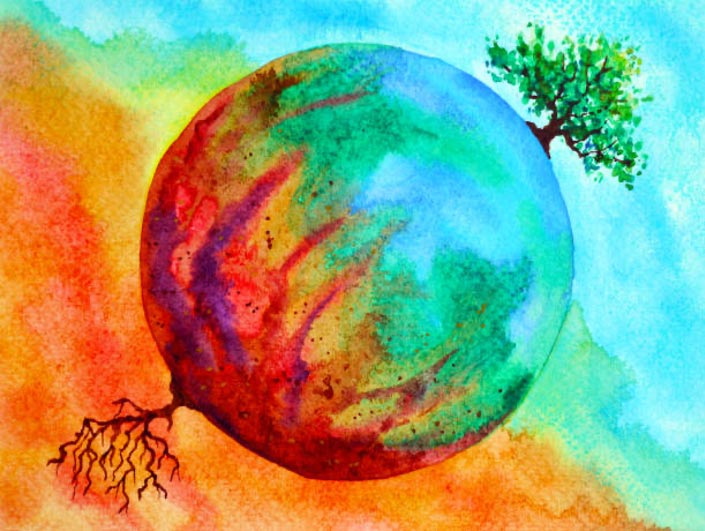
That song came to mind just recently for some obvious reasons as we live through our second big heat-dome heatwave here in Michigan, while France is currently living through its third big heatwave with utterly unprecedented temperatures for that country (the heatwave in Europe at the end of June is estimated to have caused 10,000 deaths, and we’re about to experience another influx of wildfire smoke from Canada over the next few days, and with worse air quality than when this happened before, in 2023 (if you or your friends or neighbors need respite from the smoke, remember that the All Saints’ sanctuary is air-conditioned and has a fairly good filtration system and is open 24/7). It is increasingly difficult to ignore or deny that Earth’s climate is in a state of severe change and fluctuating through dramatic swings of chaotic weather. Given the relentless burning of fossil fuels and virtually no reduction in carbon emissions over the last 20 years, it’s difficult not to imagine the Talking Heads singing about this particularly poignant moment in human history: we are in effect burning down our very own planetary house.
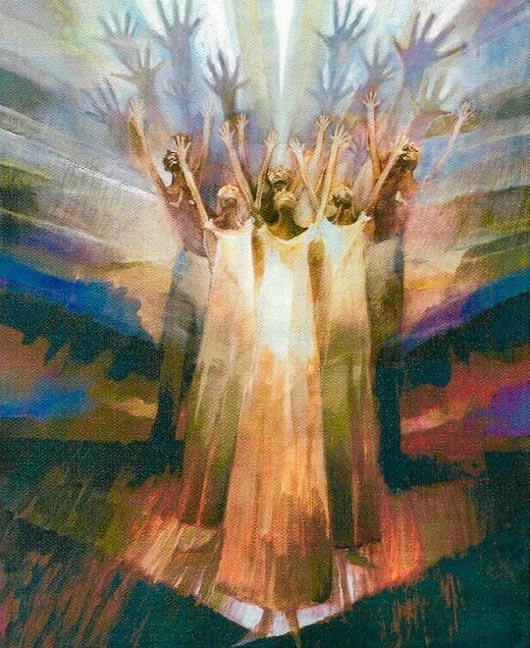
All of this is coming to mind this week for another reason as well: the lectionary. We’ve been hearing passages from Paul’s Letter to the Romans over the last several weeks, and we are now in the great eighth chapter, which is devoted to Paul’s enthusiastic embrace of Christian hope. In this chapter, Paul imagines the transformative energy of that hope reaching widely and broadly, extending outward to no less than everywhere. This Sunday we will hear the portion of that chapter in which he declares that the whole of God’s creation itself is groaning with hopeful anticipation of that day when the saving grace of God in Christ transforms everything—and indeed, we might say these days that the whole creation is “burning” with that energy of hope.
The concept of hope played a significant role in my theological education in seminary and also in my doctoral program. It eventually helped me appreciate better the dynamic character of Christianity, especially in Anglican contexts—and of course with the image of dancing! The key insight for me was realizing that hope is not at all the same thing as optimism, nor does it fall back into a kind of resigned despair. Hope, as Paul described it, is an unseen energy that animates our actions, and our interactions, our relationships and our communities with a deep sense of confidence in what lies ahead—we cannot know for sure where that path will take us, and we cannot see our destination over the distant horizon, but of this we can be certain: the world itself stands in desperate need of transformation, and hope tells us that this will happen. Martin Luther King, Jr., noted more than once during the height of the Civil Rights Movement in the 1960s that he was not optimistic about the future of race relations in the United States; but, he would always add, “I am hopeful.”
This peculiar energy of hope matters for many reasons, not least is for the realization of just how deeply and even dramatically we (and the world) will need to change if God’s own hope for God’s creation will indeed come to pass. If hope is, as Paul suggests, an arduous struggle to bring about the “new creation,” then this process (as one commentator rather wryly puts it) “is unlikely to be easy.” The nearly unimaginable transformation hope inspires is why Paul relied on the image of childbirth to describe it. “The whole creation has been groaning in labor pains,” Paul writes, and just as the birth of a baby seems extraordinary and even miraculous given what has come before, so also the birthing of God’s new creation.
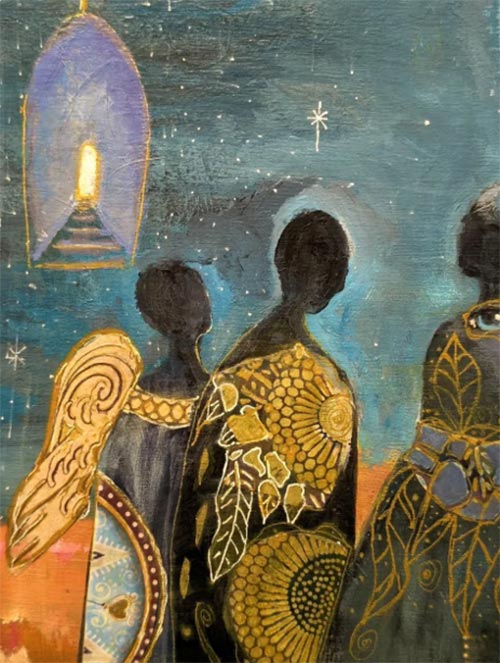
I confess to struggling with this present moment in human history; it seems impossible to imagine that the peoples of Earth will finally come together and address the crisis of climate change in ways that will make any real difference. The facts are really undeniable now as we see God’s creation groaning in deeper ways all around us, whether in terms of ongoing drought, or excessive and deadly heat, or the heartbreaking extinction of species, or the near-daily news of “unprecedented” floods, or the frightening air quality, and increasingly the migrations of people toward places on this planet that can sustain life with water and arable land (that migratory trail has already brought many people to the Great Lakes). All the more reason to reflect together, and to ponder prayerfully on Christian hope, which is not something we just manufacture on our own; as Paul insists, hope is really a gift of the Holy Spirit among us. Theologian Andrew McGowan reminds us that Paul did not imagine the Spirit as merely a feelgood experience but rather as the gritty courage to “live between worlds”—between the world of pain, which we know must somehow change, and the world still ahead, the one of abundant life we cannot yet fully imagine. There is joy in that in-between space, as McGowan notes, which is certainly not “happiness.” The joy that comes with hopefulness is likewise a gift of the Spirit, welling up in us as we help each other to notice signs of divine faithfulness in our lives of worship and service.
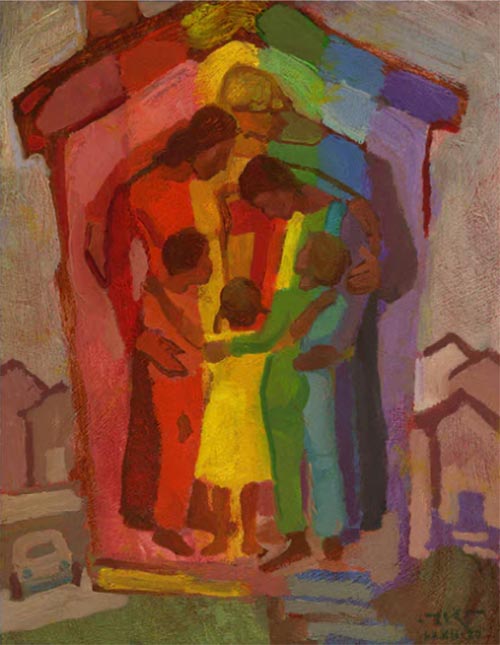
It seems especially timely to hear from this great eighth chapter of Paul’s letter to the Romans on the Sunday when we hold our Bi-Annual Parish Meeting—we will be reminded of hope for the good road ahead, even when we cannot see the destination clearly or know precisely how we will get there. That, I would say, is the Eucharistic hope we celebrate at the Table on Sunday mornings when we remember the suffering and death of Jesus as a source of our hope for resurrection and new life.
Dates and Notices
- The Bi-Annual Meeting and Picnic! We gather for some important parish business this Sunday and also to share a meal! (If you need to join the meeting remotely, log into ZOOM and use meeting ID# 83562761872 and (if needed) this password: 122167. The meeting will happen immediately after the 10:15 liturgy in the sanctuary and we will enjoy a picnic after the meeting! The Nominating Committee has put before us a slate of candidates to serve in key positions as we continue together on this “good road” in this parish; do note these nominations on which we will cast our votes on Sunday:
- For Vestry: Larry Engel and Rita Davenport.
- For Diocesan Convention: Bobbie Gaunt and Julia Lamb.
- For Endowment Fund Trustees: Janet Eder and Mary Ryder
- For the Nominating Committee: Lisa Baker and Margaret Mason
- Preaching Schedule: One of the blessings of having the Rev. Rebekah Taylor among us as our “Missioner for Digital Ministry” is the gift of having her preach on occasion! (As many of us heard this past Sunday, it is a gift indeed!) Rebekah is now currently scheduled to preach on these Sundays: August 2, August 23, September 13, October 11, and October 18.
The groaning of creation that we will hear about from Paul’s Letter to the Romans on Sunday anticipates the Season of Creation that will begin on September 1. Christians around the world celebrate the Season of Creation as a time to repair and renew our relationship with God, one another, and the vast universe of God’s creation. The season runs for five weeks, from September 1 (World Day of Prayer for Creation) through the first Sunday of October (when the Feast of St. Francis of Assisi is observed). The Episcopal Church joins with Roman Catholic, Eastern Orthodox, and most Liberal Protestant Christian denominations in this international effort of prayer and action for climate justice and to advance ecological healing. The international steering committee for this season has chosen the theme for 2026: “Living Water,” which is a wonderful theme indeed for this region of the Great Lakes! As the materials for this season invite, let’s “make living water flow as every act of care for creation becomes part of a global stream of hope.”
Observing the Season of Creation at All Saints’ Parish has become nearly as important to us as Christmas and Easter! Such prominence seems genuinely appropriate: the incarnation of God’s creative Word in Jesus of Nazareth, together with his death and rising to new life, point us toward the divine renewal of the whole creation itself. Plans are beginning to come together for our celebration and observance of this season here in this parish. Stay tuned!
Fr. Jay
A Community of Care
Please let us know how we may pray for you—concerns as well as celebrations—and other requests you may have as we strengthen our bonds of care and compassion with each other here in western Michigan and with those around the world in need of prayer.
Prayer Requests
- The United States of America—for a restoration of peace and for a renewed commitment to the common good; for an end to systemic racism and violence; for social and economic justice; for a courageous engagement with ecological renewal and healing.
- For an end to violence and a lasting peace with justice throughout the world—in the Middle East (especially in Iran, the nations of the Gulf region, and still also Gaza and the West Bank), and in Ukraine.
- The mission and shared ministry of this parish, for pastoral insight and ministerial discernment for the clergy and lay leaders, especially the Vestry and our various Ministry Teams.
- Katelyn, for comfort and healing.
- Mary Saba, for healing.
- Frank Lindsay, for healing.
- Sky and Dale Ann Suydam, for resilience and courage.
- Kevin Martin, for healing and renewed strength.
- Susan Gaunt, for renewed strength and healing.
- Ruth Vanden Bosch, for resilience and healing.
- Mike Mulcahy and Chris Seidel, for comfort and strength.
- Stephan and Maxwell and all those grieving the loss of Holly Quarles.
Special Occasions in July
Do we have your special occasions on file? Would you like to prayerfully celebrate your baptismal anniversary? Ordination anniversary? Let us know what you would like us to remember with you and we’ll post it!
Birthdays – July
Matt Jackson 7/18, Rose Meengs 7/23, Stephen Baker 7/24, Vicki Berghuis 7/25, Cynthia Sorensen 7/26
Wedding Anniversaries – July
James and Julia Lamb 7/8, Francis and Vicki Berghuis 7/24