Season of Creation Concludes this Sunday!
The wider world of God’s creation is woven throughout our liturgical year, and we make sure to emphasize those roots every September with a five-week mini-season. This observance has become nearly as important in this parish as Christmas and Easter!
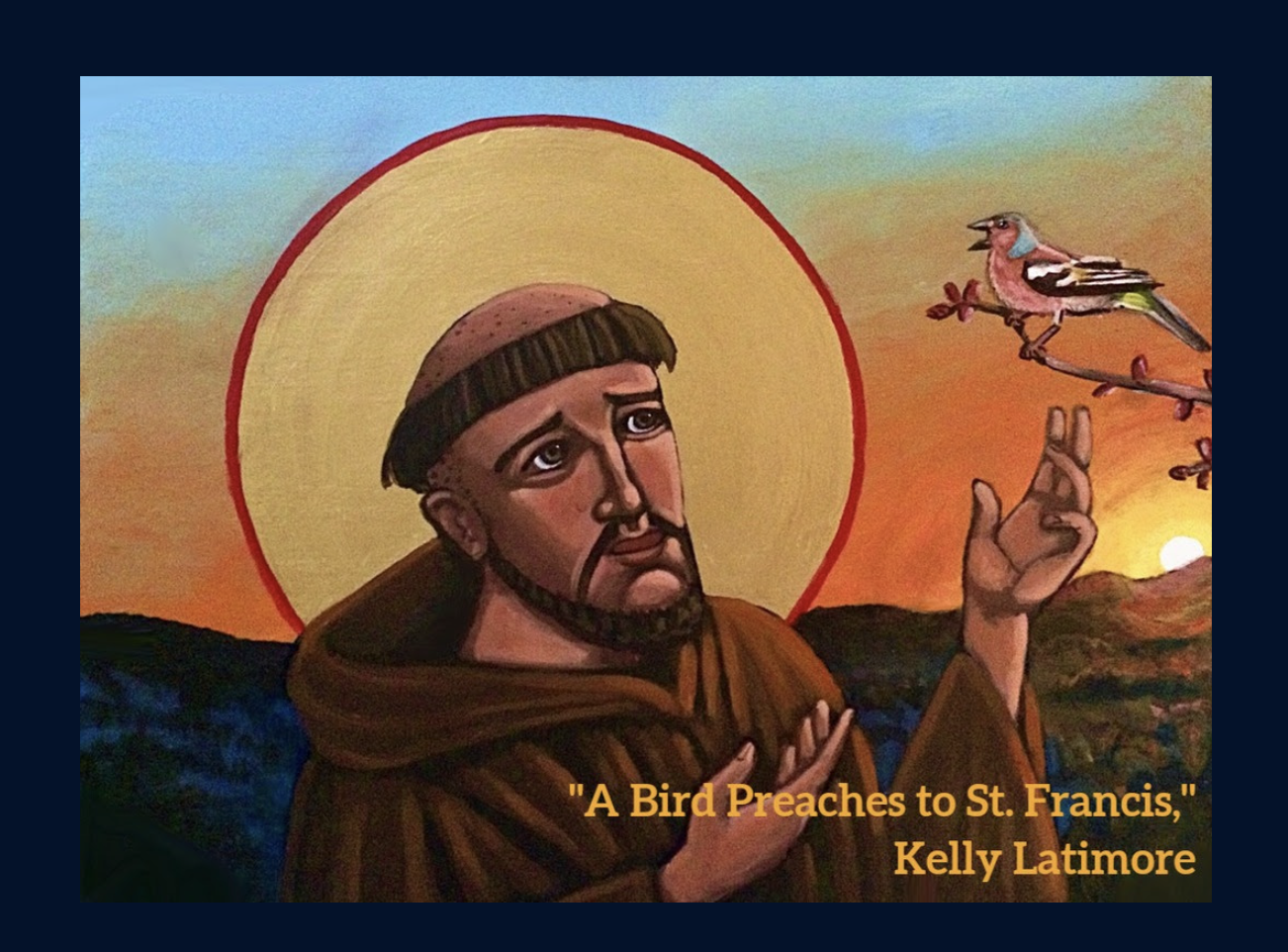
We conclude this year’s Season of Creation observance with a celebration of St. Francis’s Day on Sunday!
- Rite 1 liturgy at 8:30 and the Rite 2 liturgy at 10:15, outside (weather permitting) with the blessing of companion animals.
- Stations of Creation: October 3 (3:00 p.m.)
- Harvest Festival: Sunday afternoon, October 4, 3:00 p.m. at Tabor Hill Winery.
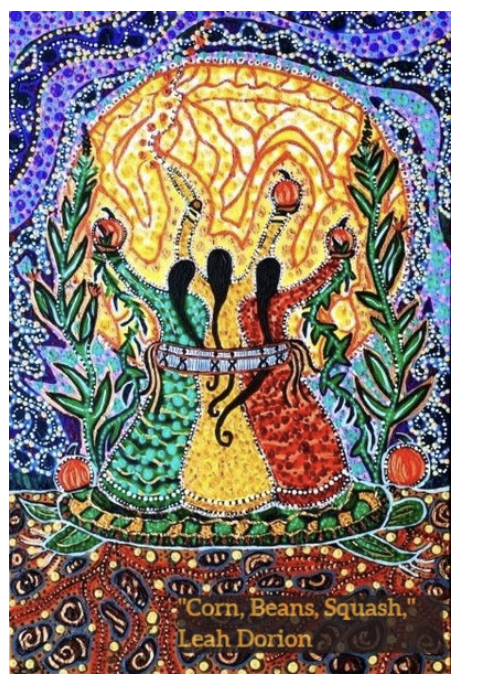
Harvest Festival
Sunday, October 4
3:00 p.m., Tabor Hill Winery
Sponsored by Interfaith Action of Southwest Michigan, the festival will take place at Tabor Hill Vineyards in Buchanan This is a wonderful interfaith gathering with music and speakers and offerings of donated supplies for the migrant farm workers who harvest our fruits and vegetables. Please bring some of these items to church for transportation to the festival: dry pinto beans, dry black beans, white rice, bar soap, toothbrushes and toothpaste, sunglasses, sunscreen, shampoo (no conditioner), men’s t-shirts, men’s long-sleeved shirts, hooded sweatshirts, baseball caps.
Learning How to Live
|
|
Rector’s Reflections A long time ago, in a galaxy far, far away… I can still remember what it felt like to see those words on a big movie screen as I watched the first installment of “Star Wars.” (My dear old dad and I were among those who saw it the very first week of its theatrical release in 1977!) It was thrilling and mind-expanding to imagine a distant history in a far-away place (aided, of course, by lots of cool special effects). I found myself similarly moved last Saturday when a small group of us prayerfully walked the trail we’ve made on the All Saints’ campus for the Stations of Creation. The readings and prayers for that spiritual practice include snippets from the creation account in the biblical book of Genesis, which are paired with short excerpts from the “book of creation” itself, key insights offered by geologists and cosmologists and biologists about the Universe and this precious planet. One of the compelling consequences of that pairing of texts is realizing both how old life is on Earth and how young humanity is. Reflect on these notable planetary milestones for a moment, which we did prayerfully this past Saturday: about 3.5 billion years ago, the first single-celled microorganism was born in the sea, followed by a host of bacteria; roughly 500 million years ago, fish emerged, and around 250 million years later, the first marine reptiles appeared; land animals and warm-blooded mammals started showing up around 200 million years ago, and then finally, our earliest ancestors emerged in Eastern Africa starting around 2 million years ago. But recognizable human beings—”Homo Sapiens”—didn’t appear until 300,000 years ago, and even then, what we today would recognize as human community and culture (language, art, writing, music) didn’t start to emerge until 40,000 years ago. More simply and briefly put: we humans are newcomers on this planet. Life on Earth preceded us by many hundreds of millions of years! The biblical account of creation in Genesis seems to make exactly that same point: human beings don’t show up in that account until the very last day of God’s creative work, the day right before God takes a much-deserved sabbath rest. All of this raises a potentially uncomfortable question: How ought we behave as newcomers on Earth? Or perhaps we rephrase that question like this: what might we learn about living on Earth from the many different creatures of God who have been here a lot longer than we have? Perhaps such questions might instill in us a bit more humility toward the many species who have lived here much longer than we have, and we might even try to learn from them about how to thrive and flourish. This coming Sunday, the last one in this year’s celebration of the Season of Creation, we will observe St. Francis’ Day, which has become for many a kind of sentimental appreciation for birds and bunnies (to which the stone statues in some of our gardens attest). To be clear, I don’t think there’s anything wrong with sentimentality, but Francis himself would likely urge us to remember his own counter-cultural and even revolutionary stance toward the wealth and privilege of his twelfth-century Italian society. Not unlike the United States, the world Francis inhabited was deeply stratified by economic and social class; the church itself reflected the comforts of the wealthy few while the working poor and socially outcast rarely found a place either in the wider culture or the church. Francis, who was born into a wealthy family, viewed that gap as an affront to the Gospel, and decided to renounce his family name and his inheritance for the sake of living in solidarity with the “poor and lowly”—that posture of solidarity extended to all the other species who share this Earth with us. Rather than only sentimental feelings about other animals, Francis’ radical way of life suggests something deeper about our relationship with the wider world of God’s creation. Our indigenous neighbors have been noting this for a long time now, and a number of Native American traditions here on “Turtle Island” (the North American continent) frame that deeper relationship as “the harmony way,” or learning how to live in harmony with the rhythms and patterns of the world of nature. This is one of the many reasons I appreciate the First Nations Version of the New Testament, which we have been using in worship this month for our Gospel readings: the “Kingdom of God” in that version is not so much a place as it is a journey and a way of life—it’s the Creator’s good road. As we welcome and embrace other species in worship at 10:15 this coming Sunday, I would invite us to take their presence among us as an occasion to reflect prayerfully on the urgent need we now face to address the disharmony of our modern way of life—we are clearly not in alignment with the life-giving systems of Earth, to which the climate chaos, ecosystem degradation, and massive extinction event currently underway clearly bear painful witness. That kind of framing of our current situation might actually yield fresh insights from an ancient text, which we will hear on Sunday: the book of Job. Mostly overlooked in modern readings, that book about the extreme suffering of an otherwise righteous human features many other species from the wider world of God’s creation. At one point, responding to his friends who are proposing ever more outlandish explanations for his suffering, Job urges them to “ask the beasts, and they will tell you.” In other words, if you want genuine insight about the world, pay attention to other animals. May we do so this week, and every week, as we seek the healing and renewal of this precious Earth. |