The Divine Dance
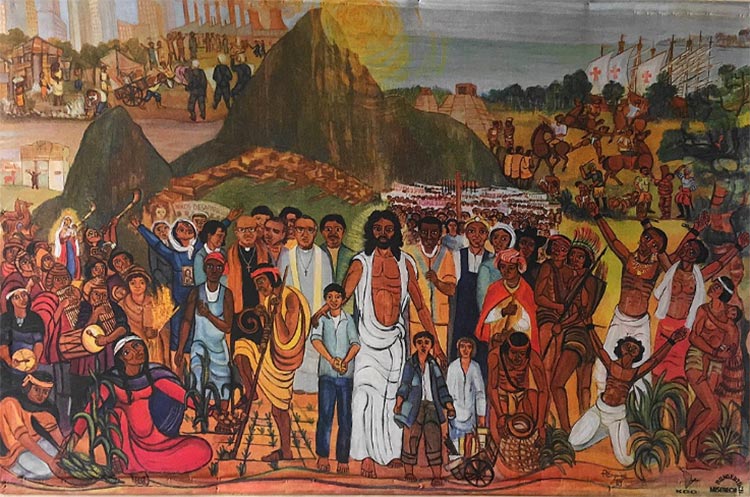
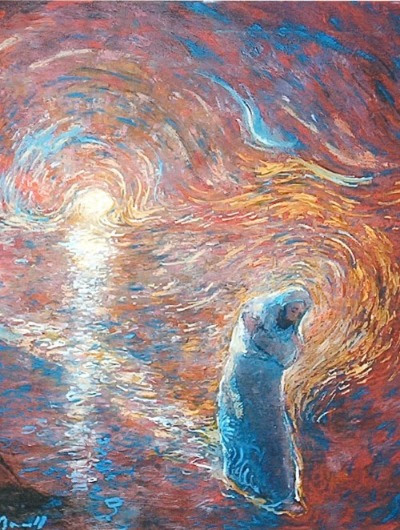
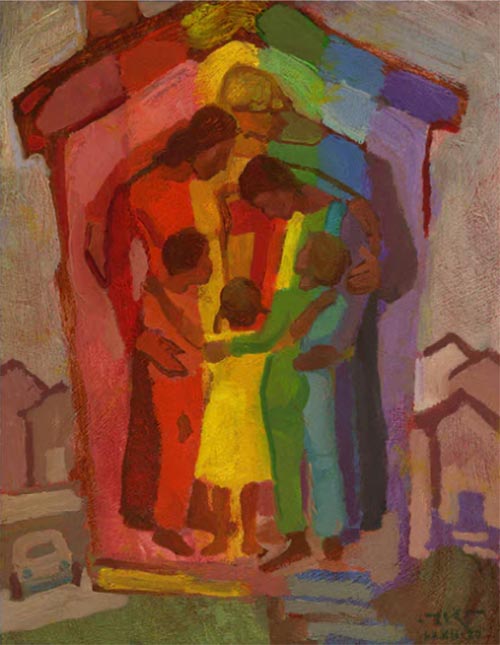
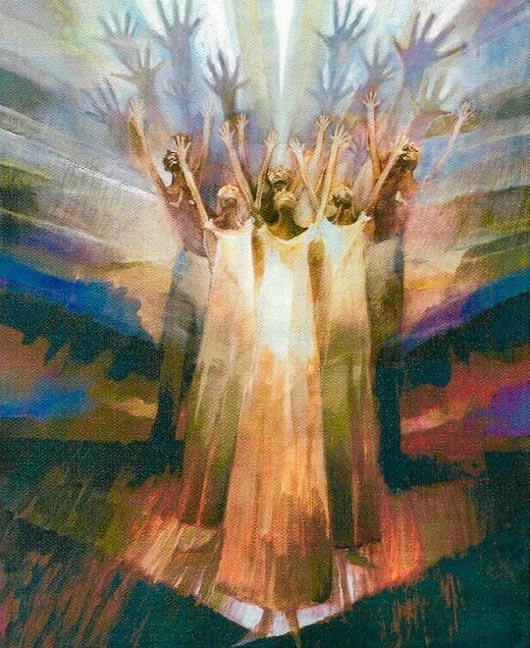
The image of dancing appears in multiple ways in nearly all of the world’s religious traditions. It’s a wonderfully dynamic image, suggesting a whole range of postures and modes of relationship, including in Christian traditions where the energetic communion of the three persons of the Holy Trinity is often portrayed with fluid motions of a dance. I used this image myself in my first book—Dancing with God—as a way to invite a vibrant engagement with the practice of hope in Anglican traditions. I’ve been reflecting on the dance of hope itself in recent weeks, and how challenging it has become in the face of our global ecological crisis: facing the grim reality of that crisis, the Divine Dance tries to steer a course between, on the one hand, dismay and despair, and on the other, unwarranted optimism and denial. The latest news reports about this are hard to miss: huge portions of Europe are currently on fire and the third severe heatwave on that continent is now threatening the European food supply in ways that haven’t happened since the Second World War. That’s just a very short list, of course, of the various modes of what some now refer to as our planetary “polycrisis,” a dangerous situation in which there are multiple fronts to address all at once.
Given all this, I am once again grateful for the ancient Hebrew prophet Isaiah. Just a couple of weeks ago I wrote here in this e-newsletter about how challenging it can be to read the many stories of violent conquest in various parts of the Old Testament; I noted then what a relief it is to land on a decidedly different perspective about the mission of God’s people in the visions of Isaiah. The lectionary this week gives us another uplifting passage from that prophetic tradition (51:1-6) in which Isaiah declares the divine promise of turning the wilderness into “Eden” and making the waste places of the desert like “the garden of the Lord.” I grew up in a Christian tradition that usually treated passages like this as an extended metaphor about the human “soul” going to “heaven.” It’s high time we take Isaiah far more seriously as an ecological prophet: God shall shower grace upon the land scarred and desiccated by human corruption. We should quickly note from this week’s passage that Isaiah is not by any means just wearing religiously rose-colored glasses: it is quite possible, he declares, that Earth herself will simply fade and pass away. Even so, Isaiah insists, God’s salvation will last forever and divine deliverance will “never be ended.” My heart feels emboldened by such hope even as I struggle to understand it.
As our annual observance of the Season of Creation quickly approaches (starting September 1), I freely admit that I am more often wrestling than dancing: how do we live with a sense of growing ecological dismay while also holding on to the ancient hope Isaiah presents? In all the preparations for this five-week season, I am committed to ensuring that we have plenty of opportunities to celebrate the wonders of God’s creation in this parish; at the same time, and as a matter of spiritual and ethical responsibility, we need to raise our collective awareness about the severity of the crisis we now face on this precious planet. It’s important to adopt both postures—joyous celebration and serious concern—for the sake of our shared commitment to bear witness to the Gospel.
What I am describing here as our shared spiritual posture during this time of crisis is of course another version of what we do every single week at the Eucharistic Table: We hold both memory and hope together at the very same time. At that Table we share in the memory of the violent torture and death of Jesus, while also sharing together in the hope of resurrection and new life. This is what we must now do in fresh and even more vigorous ways as this “fragile earth, our island home” (to quote from Eucharistic Prayer C in the 1979 Prayer Book) staggers under the destructive weight of industrial abuse, even as it blossoms forth in so many places with evidence of resilience and beauty and the vibrancy of life itself—exactly what Isaiah himself tried so hard to evoke in various ways so many centuries ago.
And so, I turn to another reason I appreciate “dance” as a divine image: it reminds me, just as Trinitarian doctrine does, that Creator God is not distant or far removed or some kind of entity “out there” to whom we must appeal for help. We are all together on the cosmic “dance floor,” learning the steps and hearing the music for the sake of healing and flourishing. Indeed, the very breath of God gives each of us and all animals life, while the creative energy of God circulates through every ecosystem, around each tree, flowing in every creek, and kissing every mountaintop. We ourselves are neither the Creator of all this magnificence nor its Redeemer; but we are called to align ourselves more fully with that divine energy, and to do so in deeper ways every day, and for the sake of a richly textured harmony with all of creation.
I am deeply glad as the Season of Creation draws near and to be entering into this intentional time of liturgical observance with all of you for the sake of Earth’s healing and renewal. It could very well be that we have now arrived at a time in planetary history when this season is needed more than ever. I hope you will join me in praying daily that this annual observance will inspire and equip all of us to live more fully as witnesses to the Green Gospel of Jesus Christ.
Dates and Notices
- Honoring Ancestors: As a way to bridge an anticipated revenue gap in our budget, we’re inviting those who can to “sponsor a Sunday” and Honor Ancestors in this second half of the calendar year. Please consider this wonderful way to name those who have inspired us in the past (or still do so today!) and then “sponsor a Sunday” to honor your roots! This will be a great way to lead up to our All Saints’ Day celebration on November 1.
- Among the various activities for the upcoming Season of Creation, please note that the Field Museum Field Trip has been cancelled for September 18; we will instead gather on Saturday, September 19, in the parish hall for a screening of an award-winning documentary film (see below).
- The entrance to the parish office through the Memorial garden is closed as we repair and paint that side of the church.
- Learn, Grow, Commit: A number of people have expressed interest in learning more about Anglican traditions, The Episcopal Church, life here at All Saints’ Parish, and what it means to become a “member.” Both newcomers and longtime members are invited to the Rectory for a reception on Sunday afternoon, September 13, 4:30—6:00 p.m. and here from our Rector about how our Saugatuck parish fits into the wider church and also the landscape of Protestant denominations and other Christian Communions. Who are we as Episcopalians, in other words? This is also a time to voice questions—no matter how big or ostensibly “small”! Questions like: Where do the prayers come from on Sunday mornings? Does Sarah, the Archbishop of Canterbury, have authority over what we do? How can we reconcile religious faith and modern science? Are there different ways to receive Communion? What does “Communion,” mean anyway? Please join the conversation regardless of your level of current or intended commitment!
A Community of Care
Please let us know how we may pray for you—concerns as well as celebrations—and other requests you may have as we strengthen our bonds of care and compassion with each other here in western Michigan and with those around the world in need of prayer.
Notices:
- George Gillespie (father of David Gillespie) died in hospice care last week; please keep David and Deborah in your prayers in this journey of grief.
Prayer Requests
- The United States of America—for a restoration of peace and for a renewed commitment to the common good; for an end to systemic racism and violence; for social and economic justice; for a courageous engagement with ecological renewal and healing.
- For an end to violence and a lasting peace with justice throughout the world—in the Middle East (especially in Iran, the nations of the Gulf region, and still also Gaza and the West Bank), and in Ukraine.
- The leadership bodies of this Diocese of the Great Lakes, and for ongoing discernment in the process toward electing our first bishop.
- The mission and shared ministry of this parish, for pastoral insight and ministerial discernment for the clergy and lay leaders, especially the Vestry and our various Ministry Teams.
- Katelyn, for comfort and healing.
- Mary Saba, for resilience and courage.
- Frank Lindsay, for healing.
- Sky and Dale Ann Suydam, for resilience and courage.
- Kevin Martin, for healing and renewed strength.
- Susan Gaunt, for renewed strength and healing.
- Ruth Vanden Bosch, for resilience and healing.
- Linda Lavender, for resilience and healing.
- Julie Fletcher, for ongoing healing.
- John Bekken, for healing and renewed strength.
Special Occasions in August
Do we have your special occasions on file? Would you like to prayerfully celebrate your baptismal anniversary? Ordination anniversary? Let us know what you would like us to remember with you and we’ll post it!
Birthdays – August
Lisa Baker 8/4, George Burt 8/9, David Bouma 8/10, Bruce Schock 8/12, David Gillespie 8/15, John Bekken 8/20, Martha Hoexter 8/20, Dave Beecken 8/21, Julia Lamb 8/23, Chea Jackson 8/31
Wedding Anniversaries – August
(There are no anniversaries listed for August)
Eucharistic Formation in the Season of Creation
Some Notes on Liturgies and Activities
The Season of Creation (September 1—October 4) is celebrated by Christians around the world as a time for renewing, repairing, and restoring our relationship with God, with each other, and with all of God’s creation. The Episcopal Church participates in this international effort of prayer and action for climate justice and to advance ecological healing and renewal. This year’s theme is Living Water, which the international Steering Committee articulated based on a passage from the ancient Hebrew prophet Ezekiel (47:9, 12). That passage uses water as a powerful image of hope and ecological healing, and the symbol for this year depicts water flowing from the Temple of God, bringing life and restoring fertility to damaged or barren ecosystems.
Observing the Season of Creation in this parish has become nearly as important as Christmas and Easter! And rightly so—the incarnation of Jesus and his resurrection from the dead point us toward the divine renewal of the whole creation itself! Click HERE for this year’s calendar of activities and please also note the following:
- We make every effort to worship in our outside sanctuary under the tents at the 10:15 liturgy, but the weather is not always cooperative. Watch for the Saturday evening email for confirmation of our location!
- The special lectionary texts for this season will return this year to four themes: Forest, Land, Wilderness, and River, and these are wonderful images for our shared reflection here along the shores of the Kalamazoo River and the shoreline of Lake Michigan!
- We are praying with some lovely liturgical texts developed by The Episcopal Church and the Church of England, including a Eucharistic prayer that invites explicit mention of our own ecological context here in western Michigan. We will use the First Nations Version of the Gospel passages on Sunday mornings (to remind us of the insights we must embrace from our indigenous neighbors for ecological renewal); the “Profession of Faith” in our worship will frame our foundational Christian belief with images drawn directly from the wider world of God’s creation; and a “Celtic” version of the Lord’s Prayer at 10:15 will evoke rich strands of insights and texts from various parts of Christian traditions that emphasis our rootedness in Earth.
- The Stations of Creation is a contemporary, ecological version of the “Stations of the Cross,” a spiritual discipline of marking prayerfully by walking from one station to another. We will engage in a collective art project to make our own Stations of Creation starting Saturday, September 5 at 9:00 a.m.!
- A screening of the award-winning documentary film “Common Ground” on Saturday afternoon, September 19 at 3:00 p.m. will introduce us to practices of “regenerative farming” and also ways to heal our partisan divisions for the sake of the common good.
- On Friday evening, September 25, we will host a fundraiser with live music and food for Wishbone Pet Rescue and Animal Shelter (located in Douglas)—a wonderful way in this season to support our canine and feline companions.
- For the annual Harvest Festival on October 4, please bring to the church some of these items for the migrant farm workers here in southwest Michigan: Dry pinto beans and dry black beans, white rice, bar soap, toothbrushes and toothpaste, sunglasses, sunscreen, shampoo (no conditioner), men’s t-shirts in sizes small, medium, and large, men’s long-sleeved shirts and hooded sweatshirts.