What are miracles, anyway?
We say it, but we don’t really mean it…or do we? When something unexpected and unusually joyous happens, we might declare how miraculous it is, even though self-proclaimed “liberals” and “progressives” don’t really believe in miracles…or do we? What are “miracles,” anyway? When they show up in biblical stories—whether the parting of the Red Sea for the ancient Israelites or Jesus walking on water, which we’ll hear this coming Sunday—modern Western people generally think of miracles as “supernatural” events, or occasions when the supposedly unbreakable “laws of nature” are actually broken or set aside. Ancient Mediterranean societies, however, would not have thought quite that way about miracles, not least because they experienced the world around them as much more fluid and dynamic rather than constrained by static “laws of nature.” The presence of God, the animating power of the Great Spirit, the vital force of life itself—ancient societies simply assumed such divine energy percolated everywhere all around us, infusing all beings and all things.
Speaking of divine action in a world defined by modern science seems at least odd if not thoroughly unreasonable. And yet, the more we learn about the complexities of our own galaxy, not to mention the deepest ocean depths on Earth, the very notion of “reasonable” and “rational” would seem to stand in need of significant revision. If so, this might shift how we think of the miraculous, not as an aberration or exception, but a vital feature woven into the fabric of space-time, stitched into the constitutional reality of the Universe itself. Rather than supernatural (above or beyond the natural world) perhaps miracles are actually hypernatural (the truly real rather than the exception to the real). Or perhaps we simply return to the ancient assumption still shaping indigenous cultures all around the planet today: Divine Reality is always appearing, acting, and actualizing in countless ways, which makes miracles the particularly noticeable eruptions of that divine presence which is always and everywhere present. Maybe we don’t need any notion of divine “intervention” at all if we were open to encountering miracles around every corner and in every relationship. After all, isn’t life itself the most miraculous event in the history of the Universe?
That question always makes me think fondly of my former colleague back in Berkeley, Bob Russell, who earned multiple advanced degrees in both physics and theology. In his classes on science and religion, he was fond of noting just how implausible, extremely unlikely, and thoroughly inexplicable the existence of life is anywhere in the Universe, let alone complex forms of life like us. The odds of such life appearing just randomly in the Universe—given the extraordinarily narrow conditions that must be met even for just one functional protein to form—are astronomically small, virtually zero; the math says life shouldn’t exist at all on this planet. When pushed, some scientists will concede that life was in some ways at least “possible” (I mean, we are here, after all), but calculating the odds that had to be overcome for life to happen is daunting: the mathematical probability that a single planet would check every single box necessary for the evolution of complex life forms is roughly 1 in many billions. It’s much more likely by far that you will become a millionaire by buying just one lottery ticket (those odds are currently around 1 in 302.6 million).
Life itself is implausible and unlikely, a thoroughly unexpected occurrence given the planetary pre-conditions required for it, and yet here we are. Love, and art, and sandy beaches, and playful dogs, and colorful sunsets, and cool evening breezes blowing off the fresh, lifegiving water of a giant inland sea—all of these are just as wildly surprising as life itself, yet how easily I take all of them for granted, as if they were just a “natural” part of reality! How strange, then, that I so often struggle with notions of profound healing, or sudden insight, or deep awareness, or a few pieces of bread and fish feeding more than 5,000 people, or a human being walking on water.
I’m going on at length about this because more than a few people today struggle with what it means to be “religious” and how to read “sacred texts” and why anyone should bother with liturgical rituals. “Miracles” are especially challenging in that regard, and I don’t find either “conservative” or “liberal” approaches particularly helpful. We can take those biblical stories seriously without supposing they happened in exactly the way presented, nor do we need to dismiss them out of hand, as if they are just artifacts of a superstitious past.
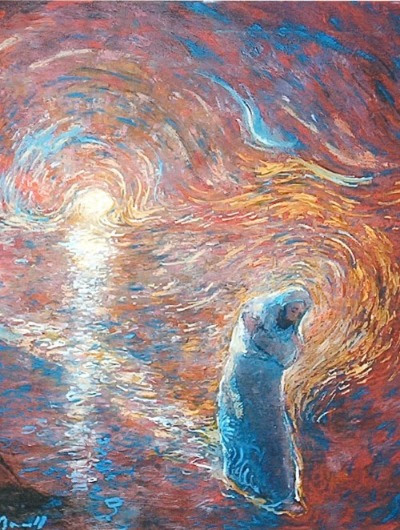
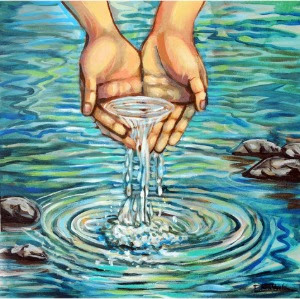
My own reading of the Bible has been enriched in recent years by resisting the assumption that biblical miracles are disruptions of otherwise natural processes, as if God resides mostly apart from God’s own creation and only occasionally shows up to break one of the physical laws of the Universe. That’s the real problem with “miracles,” it seems to me: they keep God “outside” our natural world, which also makes “natural” events void of divine presence. But what if biblical stories are instead about the astonishing closeness of Creator God to the very material world of God’s own creation? What if the story about Jesus walking on a stormy sea invites us to ponder the breathtaking intimacy God has with water rather than how Jesus broke the rules of water’s own nature? Perhaps reading such stories can be a source of inspiration for healing our broken relationship with God’s creation rather than supposing that our faith is meant to lead us away from nature. Maybe “miracles” can help us actively seek what nature still has to teach us, and then help us expect encounters with God’s own presence in the natural world all around us, and then find ourselves transformed in the process. Or to quote Shakespeare’s Hamlet, speaking to the skeptical Horatio: “There are more things in Heaven and Earth, Horatio, than are dreamt of in your philosophy.”
Perhaps the best approach to sacred texts is to adopt a posture of humility when we read or hear them, expecting new insight from them, and being willing to change our minds and grow because of them. That’s one of the (many) reasons why I have come to rely so heavily on visual art for theological reflection—how it can expand the horizon of a text toward previously unimagined vistas. And that always seems wonderfully miraculous to me.
—
Dates and Notices
- Honoring Ancestors: As a way to bridge an anticipated revenue gap in our budget, we’re inviting those who can to “sponsor a Sunday” and Honor Ancestors in this second half of the calendar year. Please consider this wonderful way to name those who have inspired us in the past (or still do so today!) and then “sponsor a Sunday” to honor your roots! This will be a great way to lead up to our All Saints’ Day celebration on November 1.
- Outdoor Sanctuary: We will be back outside this week for the 10:15 liturgy (weather and air quality permitting!). Remember that the 8:30 liturgy will always be inside.
- Preaching Schedule: One of the blessings of having the Rev. Rebekah Taylor among us as our “Missioner for Digital Ministry” is the gift of having her preach on occasion! Rebekah is now currently scheduled to preach on these Sundays: August 23, September 13, October 11, and October 18. We will also welcome J. Davey Gerhard as a guest preacher next week, on August 16 (Davey is the executive director of TENS, an organization that provides resources to parishes for stewardship and congregational development).
- The Season of Creation begins on September 1! The International Steering Committee has selected “Living Water” as this year’s theme, and we have a number of activities planned in addition to a rich offering of liturgical texts and images. We are exploring the possibility of taking a field trip to Chicago’s Field Museum to explore together the museum’s exhibit on the evolution of life on Earth. This is tentatively planned for Friday, September 18. Please, let Fr. Jay or Deacon Rebekah know if you’re interested in going—we need to discern whether this is a feasible excursion for us!
A Community of Care
Please let us know how we may pray for you—concerns as well as celebrations—and other requests you may have as we strengthen our bonds of care and compassion with each other here in western Michigan and with those around the world in need of prayer.
Prayer Requests
- The United States of America—for a restoration of peace and for a renewed commitment to the common good; for an end to systemic racism and violence; for social and economic justice; for a courageous engagement with ecological renewal and healing.
- For an end to violence and a lasting peace with justice throughout the world—in the Middle East (especially in Iran, the nations of the Gulf region, and still also Gaza and the West Bank), and in Ukraine.
- The leadership bodies of this Diocese of the Great Lakes, and for ongoing discernment in the process toward electing our first bishop.
- The mission and shared ministry of this parish, for pastoral insight and ministerial discernment for the clergy and lay leaders, especially the Vestry and our various Ministry Teams.
- Katelyn, for comfort and healing.
- Mary Saba, for resilience and courage.
- Frank Lindsay, for healing.
- Sky and Dale Ann Suydam, for resilience and courage.
- Kevin Martin, for healing and renewed strength.
- Susan Gaunt, for renewed strength and healing.
- Ruth Vanden Bosch, for resilience and healing.
- Mike Mulcahy and Chris Seidel, for comfort and strength.
- George Gillespie, for courage and resilience, and for Deborah and David.
Special Occasions in August
Do we have your special occasions on file? Would you like to prayerfully celebrate your baptismal anniversary? Ordination anniversary? Let us know what you would like us to remember with you and we’ll post it!
Birthdays – August
Lisa Baker 8/4, George Burt 8/9, David Bouma 8/10, Bruce Schock 8/12, David Gillespie 8/15, John Bekken 8/20, Martha Hoexter 8/20, Dave Beecken 8/21, Julia Lamb 8/23, Lexie McGregor 8/26, Chea Jackson 8/31
Wedding Anniversaries – August
(There are no anniversaries listed for August)