Making a Mountain out of a Mole Hill
You might recall that old aphorism about taking an otherwise minor concern and treating it as dramatically more significant than necessary: “making a mountain out of a mole hill.” I started thinking about that in a slightly more textured way a few years ago, when moles were making elaborate homes in the parish hall lawn underneath our tents; those mole hills (and the tunnels they marked) were hardly insignificant! Depending on the kind of shoes one wore, those mole hills—more accurately, those mole holes—could pose a hazard to human pedestrians. Thankfully, the moles do not appear to have taken up residence with the same kind of gusto this year, but I’m still thinking about that old aphorism, and especially how often we borrow images from the wider world of God’s creation for our figures of speech. By some accounts, for example, we are currently living through the “dog days of summer,” a time in the Northern hemisphere when the temperature and humidity are at their highest, and when the star Sirius (as the ancient Greeks and Romans noted) is rising in the night sky (often referred to as the “dog star”).
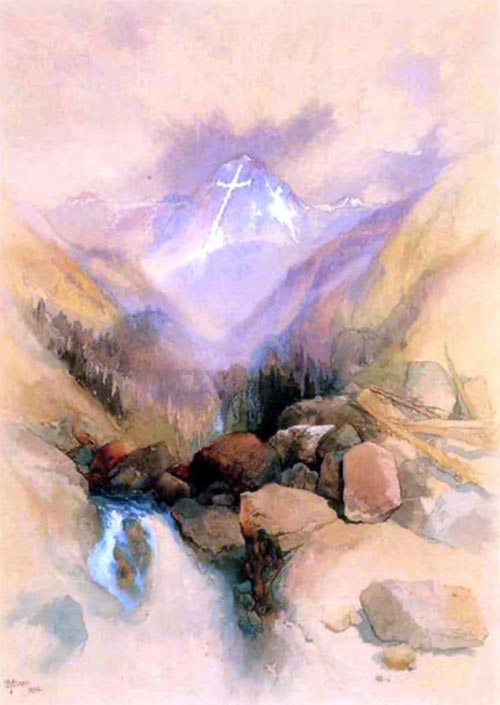
Images and symbols drawn from the wider physical world also play important roles in religious traditions. I noted in my sermon this past Sunday the importance of water itself in the story about Jesus calming the sea after walking on it. This coming Sunday, Matthew’s Jesus will refer to dinner-table scraps for the household dog as an (unfortunate) analogy for spiritual practice. Also this Sunday, the prophet Isaiah will once again refer to the “holy mountain” of God in his vision of a new day of peace with justice. Mountains are rather obvious religious symbols, not least for the sense of discipline and even arduous effort that spiritual practice demands from us, like climbing a mountain. And mountains are, obviously, visible from a long distance away; mountains become beacons for what matters as they loom on the horizon. For Isaiah, God’s holy mountain signals the ever-widening scope of God’s own mission, of creating safe places for all peoples to thrive and offer worship.
One of the difficulties in reading biblical texts carefully is how many of us have been trained from an early age to read them in a certain way. We’ve come to expect these texts to mean certain things because we’ve been told to read them in exactly that way! I came to that startling realization, more than twenty years ago now, when I started researching the role and place of other-than-human animals in Christian theological traditions. When I first started down that path, I assumed the texts to study would be fairly thin; what I found instead was far more material than I could ever deal with in a whole lifetime of scholarly endeavors! Moreover, by looking more intentionally for references to the wider world of God’s creation in biblical texts and later theological traditions, I suddenly started noticing them in nearly every story and chapter—the assumed little mole hill of texts quickly became a substantial mountain of material!
Following that bread-crumb trail into a dense forest of insights enriched not only my theological scholarship but also my daily life of faith in ways I could not have predicted—and this also made me a bit anxious. A lingering voice in my head, planted there in my Evangelical childhood, whispered warnings about “paganism,” and “witchcraft,” and “sinister druids.” I know that sounds a bit melodramatic, but there’s a rather long history in modern Western society of demonizing (quite literally) those who pay close attention to the natural rhythms of Earth, all those (especially women) who expect divine revelations in the company of animals, or in forests, or along shorelines—only Heaven, in other words, and not Earth, holds promising spiritual insights for us. Separating human life from earthly life might seem counter-intuitive but it also serves some insidious institutional postures: controlling our bodies, defining our relationships, and of course, draining our money. Today, some very powerful cultural and economic forces are deeply invested in that gulf between us and the wider world of nature—the fossil fuel industry makes record profits by convincing us that Earth is just a warehouse of resources for us to extract while industrial farms insist that affordable food demands that we spray toxic chemicals on our crops, as well as the daily torture and suffering of millions of (sentient) animals.
All of this is percolating in my mind and is weighing heavily on my heart while preparing the liturgies and collateral materials for our annual observance of the Season of Creation, which begins just three weeks from Sunday. A number of activities are in various stages of planning for that season, ways for all of us to renew our engagement with the wonders of God’s creation. As just one simple but powerful spiritual practice, I would invite us to pay special attention to the Sunday lectionary during those five weeks; many of the assigned biblical texts will be familiar, but try to notice any references to the natural world in those texts that you may have overlooked in the past, or perhaps had not thought of as a source of spiritual insight, or that suddenly illumine in newly vibrant ways some aspect of your own backyard or the trees you pass every day or the birdsong that fills these shoreline skies every day just as dawn is about to break.
Both mountains and mole hills matter in the grand scheme of nature’s divine design, each with their own vital and indispensable role to play in the abundance of life on Earth, and also for our spiritual formation—whether by reaching skyward or diving deep into the soil or reflecting peacefully somewhere in between. As we heard from Paul’s letter to the Romans this past Sunday, we need not ascend into Heaven nor descend into the abyss to find Christ; God’s own presence is all around us, in everything God has made, and, indeed, the very Word of God is “on our lips in our hearts” (10:8). Christian faith is not an escape hatch from Earth into Heaven, but invites instead the animating and (re)vitalizing realization that Heaven’s light infuses the whole of Earth, everywhere and always. As we approach the Season of Creation, I pray that this animating realization might change all of us so that we, in turn, might change the world.
Dates and Notices
- A Warm Welcome to Mr. J. Davey Gerhard, III! Davey is a friend and former colleague of Fr. Jay’s and serves as Executive Director of The Episcopal Network for Stewardship (TENS). Davey is our guest preacher this Sunday, August 16, and will also join us during coffee hour for an informal conversation about stewardship as a practice rooted in gratitude, generosity, and our shared journey together. As we look ahead to our fall stewardship season, Davey’s visit is an opportunity to begin thinking together about what it means to support the life and future of All Saints’ Parish and the work we are called to do on this “Good Road.” We hope you’ll join us in person for worship and stay for coffee and conversation afterward. If you can’t be with us in person, please join us on YouTube.
- Honoring Ancestors: As a way to bridge an anticipated revenue gap in our budget, we’re inviting those who can to “sponsor a Sunday” and Honor Ancestors in this second half of the calendar year. Please consider this wonderful way to name those who have inspired us in the past (or still do so today!) and then “sponsor a Sunday” to honor your roots! This will be a great way to lead up to our All Saints’ Day celebration on November 1.
- Bricks-and-Mortar Grant: Our diocese offers a variety of funding sources for designated purposes throughout the diocese and we recently received one such grant for repairing the brick staircase leading to the parish hall apartment, which has become quite a hazard. Many thanks to the Vestry members who are working on these alternative sources of funding for our life together: Laura Godfrey and John White (with important assistance from Mary Ryder and Matt Jackson)!
- Learn, Grow, Commit: A number of people have expressed interest in learning more about Anglican traditions, The Episcopal Church, life here at All Saints’ Parish, and what it means to become a “member.” That’s a wonderful set of desires! Please mark your calendars for Sunday, September 13, and come to the rectory at 4:30 for some light refreshments and a brief presentation from Fr. Jay about life as an Episcopalian in this parish! No ongoing commitment is necessary as part of this gathering, and even long-time members are very welcome to attend! (That said, those who are interested in making a more formal commitment, that opportunity will be available on All Saints’ Sunday, November 1!)
This qualifies as an emergency! That’s one of the startling words used in a short resolution of the 80th General Convention of The Episcopal Church (2022) dealing with global climate change, which is, as the resolution declares, “an all-encompassing social crisis and moral emergency that impacts and interconnects every aspect of pastoral concern including health, poverty, employment, racism, social justice, and family life and that can only be addressed by a Great Work involving every sector of society, including the Church.” That resolution captures well the theological and spiritual reasoning behind the efforts we devote in this parish to the Season of Creation (observed in the month of September). The clear connections made in the resolution between and among economics, race, and justice together with ecology and climate also reflects our ongoing commitments here at All Saints’ Parish to weave together our observances of Black History Month and LGBTQ Pride Month with the urgency of ecological renewal in September.
Please watch your email inboxes in the very near future for a special email announcement about a shared art project we will engage together as a parish for this important observance, and especially as we gather along the Kalamazoo River and the shore of Lake Michigan—the wonderful theme chosen this year by the Steering Committee for the Season of Creation is Living Water.
Fr. Jay
A Community of Care
Please let us know how we may pray for you—concerns as well as celebrations—and other requests you may have as we strengthen our bonds of care and compassion with each other here in western Michigan and with those around the world in need of prayer.
Notices:
- Linda Lavender will be having exploratory surgery next week; please keep her in your prayers for courage and resilience.
- Julie Fletcher stands in need of prayer for ongoing resilience and healing.
- John Bekken is recovering well from shoulder surgery; ongoing prayers for healing would be appreciated.
Prayer Requests
- The United States of America—for a restoration of peace and for a renewed commitment to the common good; for an end to systemic racism and violence; for social and economic justice; for a courageous engagement with ecological renewal and healing.
- For an end to violence and a lasting peace with justice throughout the world—in the Middle East (especially in Iran, the nations of the Gulf region, and still also Gaza and the West Bank), and in Ukraine.
- The leadership bodies of this Diocese of the Great Lakes, and for ongoing discernment in the process toward electing our first bishop.
- The mission and shared ministry of this parish, for pastoral insight and ministerial discernment for the clergy and lay leaders, especially the Vestry and our various Ministry Teams.
- Katelyn, for comfort and healing.
- Mary Saba, for resilience and courage.
- Frank Lindsay, for healing.
- Sky and Dale Ann Suydam, for resilience and courage.
- Kevin Martin, for healing and renewed strength.
- Susan Gaunt, for renewed strength and healing.
- Ruth Vanden Bosch, for resilience and healing.
- Mike Mulcahy and Chris Seidel, for comfort and strength.
- George Gillespie, for courage and resilience, and for Deborah and David.
- Linda Lavender, for resilience and healing.
- Julie Fletcher, for ongoing healing.
- John Bekken, for healing and renewed strength.
Special Occasions in August
Do we have your special occasions on file? Would you like to prayerfully celebrate your baptismal anniversary? Ordination anniversary? Let us know what you would like us to remember with you and we’ll post it!
Birthdays – August
Lisa Baker 8/4, George Burt 8/9, David Bouma 8/10, Bruce Schock 8/12, David Gillespie 8/15, John Bekken 8/20, Martha Hoexter 8/20, Dave Beecken 8/21, Julia Lamb 8/23, Chea Jackson 8/31
Wedding Anniversaries – August
(There are no anniversaries listed for August)